
 Posted ByLouis Henderson
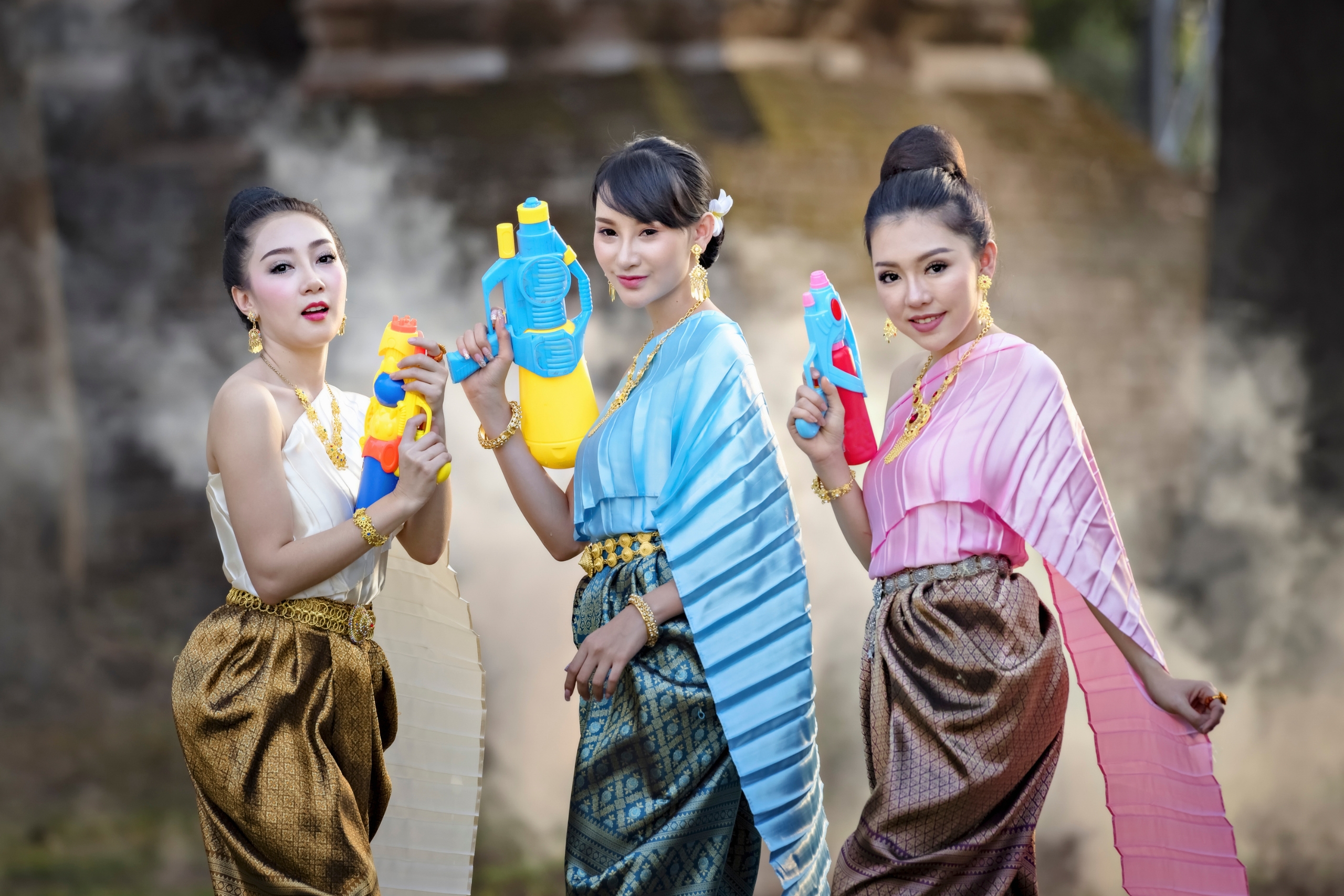
There are few travel experiences anywhere in the world quite as immediately, viscerally, and unforgettably joyful as finding yourself in the middle of Thailand during the Songkran Water Festival — the annual Thai New Year celebration observed from the thirteenth to the fifteenth of April that transforms every street, every public space, and effectively the entire country into the world’s largest, most exuberant, and most gleefully participated water fight. The streets run with rivers of water, people armed with everything from elegant silver bowls to high-powered water cannons pursue complete strangers through crowded thoroughfares with the single-minded purpose of drenching them as thoroughly as physics and available water supply permit, and the boundary between tourist and local, between participant and bystander, between dry and wet dissolves within moments of setting foot outside any building during the festival’s peak days with the cheerful inevitability of a heavy tropical downpour. Yet to experience Songkran only through its spectacular, internationally famous water battle dimension is to encounter only the most visible surface of a celebration whose cultural depth, spiritual significance, and genuine human warmth extend far beyond the exhilarating chaos of the street water fights into the temple ceremonies, the family gatherings, the elder blessings, and the deeply Buddhist philosophy of renewal, purification, and gratitude for life whose expression through water is as old as Thai civilisation itself. This guide provides the complete traveller’s companion to experiencing Thailand’s Songkran — the history and cultural meaning behind the celebration, the best locations across Thailand to experience its different dimensions, what to expect and how to prepare practically, and the specific cultural sensitivities and respectful behaviours that ensure every visitor’s engagement with this extraordinary tradition honours the genuine heritage whose celebration it is privileged to witness and participate in.
The History and Cultural Meaning of Songkran: Far More Than a Water Fight
The Songkran festival’s origins lie deep in the agricultural and astronomical calendars of the ancient civilisations of mainland Southeast Asia — a celebration of the sun’s annual passage from one zodiac sign to another that marks the traditional new year according to the astronomical and astrological systems that governed the calendar of pre-modern Thailand, Cambodia, Laos, Myanmar, and the broader Tai-speaking world. The word Songkran itself derives from a Sanskrit term whose meaning encompasses the movement or passage of the sun from one position to another — a cosmological transition that in the agricultural calendar corresponded to the end of the dry season, the approaching arrival of the monsoon rains, and the beginning of the new agricultural cycle whose success determined the prosperity of communities entirely dependent on rain-fed farming for their survival and their sustenance.
The water that is so central to Songkran’s celebration carries this agricultural and cosmological meaning — it is not merely the novelty of a water fight but the ritual enactment of the welcome given to the rain whose arrival after months of dry season heat represents the renewal of life, fertility, and prosperity for the land and its people. Water in the Buddhist and Hindu-influenced religious culture of traditional Thailand is the universal medium of purification — the element that cleanses away the impurities, the misfortunes, and the accumulated negative experiences of the year that has passed and prepares the spirit and the household for the fresh beginning that the new year represents. The ceremonial pouring of lustral water — water blessed by Buddhist monks and scented with jasmine, roses, and other aromatic flowers — over the hands and shoulders of respected elders and revered Buddha images is the ritual heart of Songkran whose gentle, intentional character is entirely different from the street water battles, and whose observance connects the contemporary festival to an unbroken tradition of respect, gratitude, and spiritual renewal whose continuity across generations is one of the most genuinely moving aspects of the Thai cultural heritage that Songkran most directly and most beautifully expresses.
The family dimension of Songkran — the gathering of family members who may have been separated by work and urban migration across the preceding year, the return to family homes for the ceremonial bathing of parents and grandparents whose blessing is sought for the new year, the sharing of traditional foods, and the visits to temples for merit-making activities including the offering of food to monks and the release of caged birds as acts of compassion and spiritual generosity — gives the festival its deepest emotional meaning for Thai people themselves, whose experience of Songkran is less about the water battles that international visitors most visibly encounter and more about the renewal of family bonds, the expression of filial love and respect, and the collective reaffirmation of the Buddhist values of generosity, gratitude, and the aspiration for merit that characterise the most important festival occasions in Thai religious and social life.
Where to Celebrate Songkran: Thailand’s Best Locations for Every Type of Traveller
Thailand’s Songkran celebration takes place across the entire country simultaneously — from the smallest rural village where temple ceremonies and modest family gatherings express the festival’s traditional character to the largest cities where the street water battles attract hundreds of thousands of participants whose collective energy creates the festival atmosphere whose scale and intensity have made specific Thai locations internationally famous as Songkran destinations. The specific location chosen for Songkran significantly determines the character of the experience — the type and intensity of the water activities, the balance between traditional ceremony and modern celebration, the crowd density and the ease of navigation, and the specific atmosphere whose quality varies considerably between Thailand’s different cities and regions.
Chiang Mai in northern Thailand is the most celebrated and most internationally renowned Songkran destination in the entire country — a city whose combination of the ancient moat surrounding the old city centre, the extraordinary density of historic temples within and beyond the moat, and the genuine cultural depth of northern Thai Songkran traditions creates a festival experience whose quality is widely considered the finest available anywhere in Thailand for visitors who want the full spectrum of the celebration’s traditional and contemporary dimensions simultaneously. The moat — the water-filled channel that traces the square perimeter of Chiang Mai’s old city wall — becomes the epicentre of the most concentrated and most enthusiastically contested water battles in the country during the festival’s peak days, with the roads alongside its banks lined with participants using everything from traditional silver bowls through to full-scale hosepipe connections to the moat water itself, creating a continuous battle zone of extraordinary energy and extraordinary wetness that extends for the entire length of the moat’s four-kilometre perimeter. Beyond the famous moat battles, Chiang Mai’s Songkran includes the traditional sand pagoda building at Wat Phra Singh and other major temples, the ceremonial bathing of the Phra Buddha Sihing statue whose procession through the city streets is one of the most sacred and most visually magnificent events of the northern Thai Songkran, and the respectful elder blessing ceremonies in family homes and community centres whose observation provides the most direct available window into the cultural and spiritual meaning that Songkran holds for the Thai people who celebrate it as the most important occasion of the family and community year.
Bangkok offers Songkran on the grandest possible urban scale — a megacity of ten million people whose transformation during the festival into a continuous water battle zone of astonishing density and intensity creates an experience whose sheer overwhelming scale is unlike anything available in any smaller Thai city. Silom Road and Khao San Road are the two Bangkok locations most famous for their Songkran water battles, with Silom attracting the largest and most densely packed crowds of any single Songkran location in the country and Khao San Road providing the more internationally mixed, more party-festival atmosphere whose specific character appeals to the backpacker and younger independent traveller demographic. The Pattaya Songkran — extending over several days longer than the official three-day national celebration and incorporating the specific beach-and-water-park dimension of this coastal resort city — provides a further distinct experience whose combination of the water festival atmosphere with the beach holiday setting creates a Songkran character entirely different from both the culturally deep Chiang Mai experience and the urban intensity of Bangkok.
What to Expect and How to Prepare: The Practical Traveller’s Songkran Survival Guide
The practical preparation for a Songkran experience in Thailand requires a specific approach to clothing, electronics, valuables, accommodation, transport, and personal expectations whose neglect by unprepared first-time visitors reliably produces the specific frustrations and the specific losses that a modest amount of advance planning entirely prevents. Songkran is not a festival that can be observed from a comfortable dry distance — its entire character is participatory, and the visitor who wanders into any significant Songkran celebration zone without accepting the complete inevitability of total soaking within moments of arrival has misunderstood the nature of what they have entered and will be surprised by an outcome that every other participant considers perfectly obvious and entirely delightful.
Clothing for Songkran should be specifically selected for its ability to survive repeated complete soaking and rapid drying without damage, without transparency, and without the specific discomfort of saturated heavy fabrics whose continued wearing across a day of water battles creates genuine physical discomfort. Lightweight synthetic fabrics — quick-dry shorts, simple t-shirts, and the specific Songkran shirts whose colourful, water-themed designs have become one of the festival’s most enjoyable sartorial traditions — are the practical choice whose rapid drying between water attacks and comfortable wet-wearing makes sustained festival participation genuinely pleasant rather than merely tolerated. Footwear should be the simplest possible waterproof or quick-dry option — sandals or flip-flops whose soaking creates no lasting damage and whose simplicity makes navigation of the frequently flooded streets straightforward without the ankle-deep water concerns that more enclosed footwear creates. The specific precaution of wearing water-protective cases for any unavoidably carried electronic devices, applying sunscreen well in advance of entering water battle zones and reapplying it frequently through the day’s activities, and leaving all non-essential valuables in the hotel room safe whose security eliminates the specific anxiety of carrying valuable items into a context whose water exposure and crowd density create the conditions for both accidental damage and opportunistic theft, are the practical preparations whose consistent adoption by experienced Songkran travellers reflects their hard-won knowledge of what makes the festival experience maximally enjoyable rather than stressful.
Accommodation booking for the Songkran period requires advance planning whose urgency is proportionate to the desirability of the specific location being targeted — Chiang Mai’s best-located hotels fill months in advance for the Songkran dates, and the visitor who attempts last-minute accommodation booking for a Chiang Mai Songkran experience is likely to find themselves either priced out of the most conveniently located options or accepting accommodation whose distance from the festival’s heart requires the additional complication of transport to and from celebration zones that the traffic congestion of Songkran days makes significantly more difficult than the normal driving conditions of any ordinary Bangkok or Chiang Mai street suggest. The moat-side location in Chiang Mai that allows walking distance access to the water battle epicentre, the Silom or Khao San adjacent accommodation in Bangkok whose proximity to the main celebration zones eliminates transport entirely, and the advance booking made six to eight weeks before the April dates for any of these premium locations are the specific accommodation strategy whose execution at the right time provides the most festival-convenient and most logistically effortless base for the Songkran experience that every visitor to Thailand during this extraordinary period deserves to have.
The Traditional Ceremonies: Experiencing the Sacred Dimension of Songkran
For the visitor whose travel motivation extends beyond the water battles to the genuine cultural and spiritual experience of Songkran’s traditional ceremonial dimension, Thailand offers extraordinary access to the Buddhist rituals, family observances, and community ceremonies whose continuing vitality alongside and within the modern water festival creates the specific quality of a living cultural tradition rather than a heritage performance maintained for tourist consumption. The traditional ceremonies of Songkran are not staged events — they are genuine expressions of Thai Buddhist practice and Thai family values whose observation by respectful and appropriately prepared visitors provides one of the most directly authentic cultural experiences available in the entire travel and tourism landscape of Southeast Asia.
Temple ceremonies on the morning of the first Songkran day begin before dawn in many Thai communities, with merit-making activities including the offering of food to monks whose early morning alms rounds provide the opportunity for the lay Buddhist community to accumulate merit through generosity — one of the most important religious activities of the Thai calendar whose Songkran timing connects the new year celebration to the most fundamental values of Buddhist spiritual practice. The ceremonial bathing of revered Buddha images — the pouring of scented water over specific sculptures of particular historical, spiritual, or community significance — takes place at major temples throughout the festival period and is typically accompanied by the chanting of monks, the burning of incense, and the specific atmosphere of collective devotion and communal spiritual focus whose quality is one of the most genuinely moving available to any visitor prepared to rise early, dress appropriately, and approach the ceremony with the quiet respect and the genuine curiosity that its sacred character deserves. The elder blessing ceremony — in which younger family members pour scented water over the hands of parents and grandparents as an expression of respect, gratitude, and the request for blessing in the new year — is the most intimate and most emotionally significant domestic ritual of the entire Songkran celebration, and its observation or participation by invited guests creates the most direct possible human connection with the genuine meaning that the festival holds for the Thai families whose generosity in sharing this private celebration with curious visitors is one of the most consistently remarked-upon qualities of Thai hospitality during the festival period.
Respecting the Culture: Visitor Etiquette and Responsible Participation
The extraordinary accessibility and the unconditional welcome that Thai Songkran celebration extends to international visitors carries with it the specific responsibility of cultural respect whose consistent demonstration through appropriate behaviour, appropriate dress, and appropriate engagement with both the festive and the sacred dimensions of the celebration reflects the quality of the visitor’s understanding of what they have been privileged to witness and participate in. Songkran is not merely a street party organised for tourist entertainment — it is a sacred national celebration of profound cultural and spiritual significance for the Thai people whose generous inclusion of international visitors in their most important annual observance deserves the response of genuine respect, genuine curiosity, and the specific behavioural awareness that distinguishes the culturally sensitive traveller from the visitor whose engagement with another culture’s traditions extends only to the dimensions of the experience that are immediately enjoyable without the reflection that genuine cultural encounter always requires.
The most fundamental cultural respect requirement during Songkran is the recognition of the contexts in which water activities are entirely appropriate and those in which they are entirely inappropriate. The streets designated as water battle zones, the moat area in Chiang Mai, the Silom and Khao San areas in Bangkok, and any public space where people are visibly and actively engaged in water battles are the contexts where enthusiastic participation is entirely welcomed and entirely appropriate. Temples, the interior spaces of religious buildings, the areas immediately surrounding active religious ceremonies, and any space where the nature of the activity clearly distinguishes it from the festive celebration dimension are contexts where water activities are entirely inappropriate — and the visitor who respects this distinction is the visitor whose engagement with Songkran reflects genuine cultural understanding rather than the undiscriminating enthusiasm whose application to every context regardless of its appropriateness creates the specific disrespect that no amount of tourist goodwill entirely compensates for. The dress code for temple visits during Songkran — shoulders and knees covered, footwear removed before entering temple buildings, voices and behaviour moderated to the quiet respect whose expression in sacred spaces is as fundamental to Thai cultural values as the joyful exuberance of the street water battles is to the festive dimension of the same celebration — is the clothing requirement whose consistent observance by respectful visitors demonstrates the cultural awareness that the depth and the beauty of the Thai tradition being experienced genuinely deserves.
Conclusion
Thailand’s Songkran Water Festival is one of the most extraordinary, most joyful, and most genuinely culturally rich travel experiences available anywhere on earth — a celebration whose combination of the spectacular, anarchic, and entirely irresistible physicality of the world’s greatest water fight with the deeply moving spiritual and family dimensions of a Buddhist new year tradition whose continuity across centuries of Thai cultural life creates the specific quality of a living heritage whose encounter by a respectful and curious visitor is genuinely transformative. The travel and tourism experience of Songkran rewards every dimension of the engaged visitor’s attention — the exhilaration of the street water battles whose participation requires only the willingness to get completely, irrevocably, and immediately drenched, the quiet beauty of the temple ceremonies whose sacred character provides the cultural counterpoint that gives the entire festival its depth and its dignity, and the warmth of the Thai welcome whose generosity in sharing the most important celebration of the family and community year with the international visitors who arrive in their millions communicates something profoundly genuine about the specific quality of Thai hospitality whose reputation across the world’s travel and tourism community is as well-earned and as enduringly deserved as any national reputation for cultural generosity available anywhere in the remarkable diversity of human welcoming traditions that the world’s great travel destinations collectively represent. Come prepared to get wet, come ready to be genuinely moved, and come with the respect, the curiosity, and the open-heartedness that this extraordinary celebration of water, renewal, and the enduring human love of a new beginning deserves from every visitor fortunate enough to experience it.